Stress shouldn’t feel second nature. But these days, between work, family, finances, the news, and tech overload, it can sometimes feel like stress is coming at you from every direction.
How do you actually reduce this mental stress? It’s tempting to cope by trying to push through these negative feelings, but the truth is, stress isn’t just in your head. Your body feels it, stores it, and responds to it. Over time, that stored-up stress can take a real toll on your health.
Real stress relief means addressing not just your thoughts, but your body too. From simple mood-boosters to massage therapy, we’re here to explore how to relieve stress, inside and out.
What stress really does to your body
Stress is your body’s built-in survival system. It kicks you into fight-or-flight mode, priming you to respond to a threat, whether it’s a missed deadline or a tiger loose in your neighborhood.
The process starts with a surge of cortisol, the body’s primary stress hormone. Your heart rate spikes, your breathing gets shallow, and your muscles tense up, ready for action.[1] [2]
In small doses, this response is helpful, even necessary. A little stress can be healthy and boosts your physical and cognitive abilities during tough situations.[3] But if you feel like you’re overflowing with mental stress more often than not, that’s when problems can start. Chronic stress can throw your body off balance — disrupting sleep, digestion, mood, immune function, and even muscle health.[4]
How do you know if your body’s stuck in mental stress mode? Common signs include:
- Persistent neck and shoulder tension[5]
- Frequent headaches[6]
- Fatigue that doesn’t go away with rest[7]
- Jaw clenching or teeth grinding[8]
- Feeling anxious, edgy, or low more often than not[9]
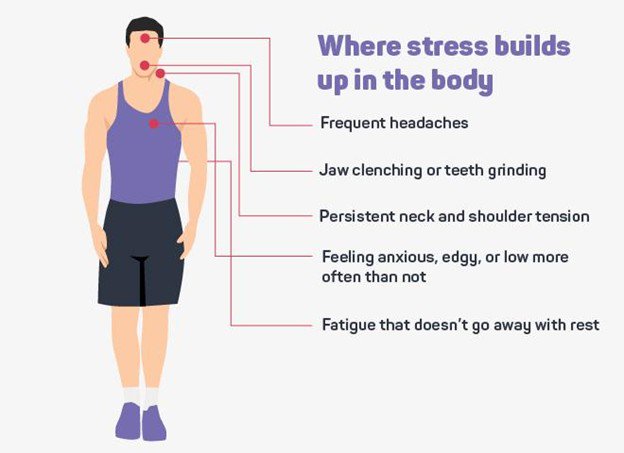
If that list sounds familiar, your body might be waving a little white flag. It’s time to listen.
How to reduce mental stress
While there’s no magic switch to turn stress off, there’s a lot you can do to help your body process it, reset, and feel more grounded.
One idea for mental stress management is to create a “dopamine menu.” This is a handy list of mood-boosting activities you can pull from when you’re feeling overwhelmed, foggy, or just ‘off’. It’s like your own personal stress relief toolkit.
Each category of the menu serves a purpose:
- Appetizers: Quick, low-effort boosts to lift your mood in a pinch
- Mains: More time- or energy-intensive activities with longer-lasting benefits
- Sides: Things you can do while doing something else (great for multitaskers!)
- Desserts: Little indulgences that bring joy or comfort
Instead of falling into old stress traps like doomscrolling or overworking, you can pick something off your dopamine menu that actually supports your body and mind.
Here are some tips for how to reduce stress, backed by science:
1. Surround yourself with support
Connection is powerful. Whether it’s calling a friend, texting a family member, or joining a group or class that interests you, spending time with people who get you can ease stress and boost emotional resilience.[10]
Don’t wait until you’re feeling low to reach out—make connection a regular part of your routine.
2. Quiet your mind
Meditation, mindfulness, breathwork, or even a quiet cup of tea can help calm racing thoughts and bring your nervous system back to center.[11]
Start small. Just 2–3 minutes of stillness with your eyes closed can make a difference. Over time, your brain learns to chill out more quickly.
3. Get moving
Physical movement is another great way to shift your stress state.[12] When your body loosens up, your mind often follows.
You can do this by stretching, taking a walk around the block, doing a little yoga, or having a two-song solo dance party— no gym membership required! The goal is to get out of your head and into your body.
4. Breathe like you mean it
Your breath is a direct line to your nervous system. Slow, intentional breathing helps pull you out of mental stress mode and into a calmer state.
[13]
Try box breathing (inhale for 5 seconds, hold for 5 seconds, exhale for 5 seconds, hold for 5 seconds). Another technique is belly breathing: place a hand on your stomach and make sure it rises with each inhale.
5. Laugh more
Laughter can trigger feel-good chemicals like dopamine and endorphins while lowering your stress hormones.[14] They don’t call it the best medicine for nothing.
Watch a ridiculous movie, save your favorite memes to a folder you can flip through for emergencies, or FaceTime that one friend who always cracks you up. Learning how to reduce stress can be fun!
6. Avoid stress traps
It’s tempting to reach for a quick fix—an adult beverage, a late-night scroll, skipping sleep—but those habits can just end up adding more stress in the long run.
Try swapping the stress traps for one of your dopamine menu items instead. Building healthy stress relief habits means choosing what will truly support your body for the long haul, not just what feels good in the moment.
Dopamine Menu
Appetizers
- Call or text someone who get you
- Practice one-minute deep breathing
- Sip a warm beverage
Main Course
- Go for a 20-minute walk
- Get a personalized massage or restorative facial
- Cook yourself a healthy meal
- Journal or meditate for 10+ minutes
Sides
- Listen to music you love
- Light a candel or diffuse essential oils
- Practice posture check or gentle neck rolls
Dessert
- Watch something that makes you laugh
- Treat yourself to a favorite snack or sweet
- Take a relaxing shower
- Re-read a book or rewatch a comfort show
Why massage helps your body let go of stress
Sometimes, your body needs a little extra help getting rid of long-term stress buildup. But how do you relieve this deep-seated stress? Massage can be a powerful tool for helping your body recover from stress and get you back to feeling like yourself again. It can:
- Physically release muscle tension. A good massage helps smooth out the knots, muscle spasms, and everyday tension your body holds onto when you’re stressed.[15]
- Lower cortisol. Massage has been shown to reduce levels of cortisol, your body’s main stress hormone, helping you feel more balanced and less on-edge.[16]
- Boost feel-good brain chemicals. Massage has been shown to increase serotonin and dopamine—neurotransmitters that are known to boost your mood and help you feel more calm, content, and connected.[17]
- Calm your nervous system. As your body relaxes on the table, parasympathetic activity (a.k.a. “rest and digest” mode) kicks in. By reducing your heart rate and blood pressure, this pulls you out of fight-or-flight and into a state of deep relaxation.[18]
Give your body the support it deserves
You’re carrying a lot—but you don’t have to hold onto it alone.
Whether you’re navigating major life stress or just feeling the weight of the daily grind, a regular massage routine at a Massage Envy franchised location near you can help your body reset, restore, and breathe a little easier. It can be a great mental stress management tool to incorporate as part of your wellness routine.
Let a skilled massage therapist tailor a session to meet your goals. From Swedish massage to help gently relax tense muscles, to deep tissue massage for stubborn knots, to myofascial release therapy that targets the fascia (the connective tissue that tightens up when stressed), your body can get the focused support it needs to truly let go.[19]
Take care of yourself the way you deserve. Book your stress-relieving massage today.