If you’re searching for a meaningful, hands-on career where you can make a real difference every single day, learning how to become a certified massage therapist might be the path for you. Massage therapy is a growing, in-demand profession that blends science and compassion to help people move better, feel better, and reconnect with their bodies.
At Massage Envy, we know how essential skilled therapists are. That’s why Massage Envy franchised locations work hard to create an environment in which massage therapists can truly thrive, by offering support, continuing education, and real opportunities for growth. If you’ve been wondering how to become a registered massage therapist and what your career could look like once you get there, you’re in the right place.
What does a massage therapist do?
If you’ve ever had a really good massage, the kind that makes it feel like your whole body hit reset, you’ve already felt a massage therapist’s influence. Massage therapists use a variety of hands-on techniques and modalities that address the soft tissues of the body, to help people feel better. That could look like helping to ease everyday muscle tension from too much desk time, helping athletes recover faster, or giving someone a moment to recharge and relax.
At the heart of their career, massage therapists:
- Consult with and listen to clients or patients to understand what’s going on in their bodies
- Inform and recommend the right massage techniques based on someone’s goals
- Perform skilled, effective hands-on bodywork
- Maintain a clean, relaxing environment
- Educate clients on self-care and wellness habits
- Document sessions and track clients’ progress over time
Techniques you’ll study
Massage therapists can specialize in different modalities as they progress in their career, but most start with foundational techniques like:
- Swedish massage for relaxation
- Deep tissue massage for muscle tension and mobility
- Sports massage for performance and recovery
- Trigger point therapy for focused pain relief
Where massage therapists work
One of the best parts about this career is that you can choose the environment that fits your personality. Massage therapists commonly work in:
- Massage Envy franchised locations
- Day spas and resort spas
- Chiropractic offices and physical therapy clinics
- Wellness centers and holistic health practices
- Fitness centers and sports facilities
- Private practices
Massage therapy is a career where you see the difference you make, session after session, in helping people feel better. Over time, you build trust with clients as you support them on their wellness journey.
Steps to becoming a massage therapist
If you’re beginning to picture yourself in this career, you might be wondering exactly how to become a massage therapist. Luckily, the path is straightforward, and once you understand the process, you’ll see how achievable it really is.
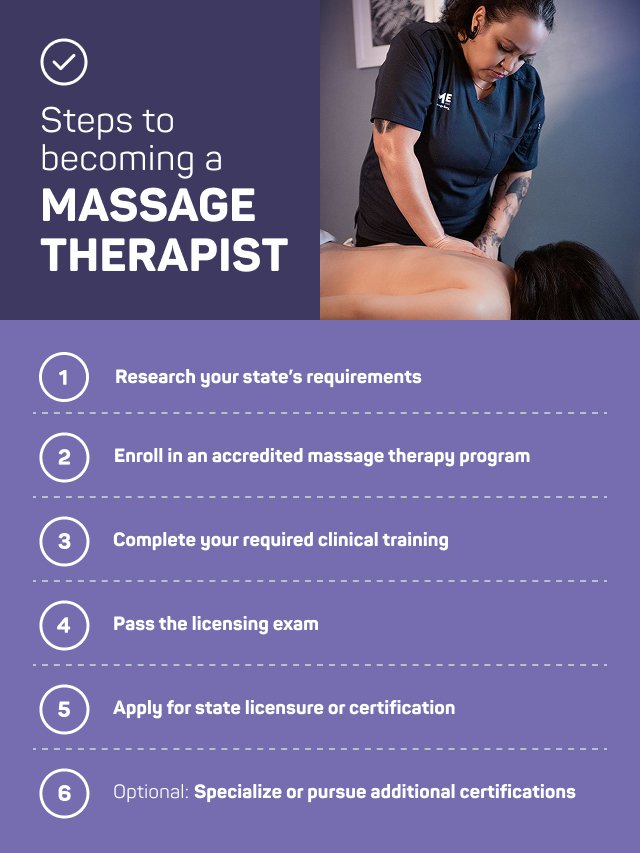
1. Research your state’s requirements
Every state has its own statutes, rules, and regulations for how to become a licensed massage therapist, so your very first step is checking what your state requires. Some states require a specific number of education hours. Others require a certain type of exam. A few also require background checks or CPR certification. Knowing the requirements up front will keep you from wasting time or enrolling in the wrong program.
2. Enroll in an accredited massage therapy program
Figuring out how to become a certified massage therapist starts with finding the right school for you. Look for programs accredited by organizations like COMTA or ABHES. Accreditation ensures the curriculum meets the professional training and education benchmarks you’ll need later, and means that you should graduate with a certificate.
Your program will cover anatomy, physiology, ethics, business basics, hands-on techniques, and professional skills. This is where you start building the confidence and competence that clients will eventually rely on, and that is a necessary step towards getting your license.
3. Complete your required clinical training
Most programs include supervised clinical hours so you can work with real clients in a safe learning environment. This is where everything comes together: your communication skills, your technique, your sense of pressure, and your ability to read the body. Clinical training is also crucial in understanding how to become a massage therapist since this is the moment where many students realize they’re genuinely good at this work, and that they’re on the right career path toward making a positive difference in people’s lives.
4. Pass the licensing exam
Nearly every state uses a standardized massage licensing exam, such as the MBLEx. This test ensures you understand safety, ethics, anatomy, and hands-on fundamentals. It’s important to pass in order to get your license, yes, but studying for this test will also help you become a safe, knowledgeable practitioner that your clients can trust. Many school programs have MBLEx study built in, but additional resources can be found from national organizations like FSMTB, AMTA, and MBLEx itself.
5. Apply for state licensure
After you pass your exam, you can submit your application for your state license. This is the final step in becoming a licensed massage therapist and means you can start working professionally.
You may wonder what the difference is in how to become a registered massage therapist versus how to become a licensed massage therapist. These terms actually refer to regional differences rather than different professions. Depending on where you live, you might see the title LMT (Licensed Massage Therapist) to indicate someone who holds a state-issued massage license. RMT (Registered Massage Therapist) is used to show that a practitioner has met local education and registration standards. The career pathway is similar across regions: complete your education, pass your exam, and meet your local licensing or registration requirements.
6. Optional: Specialize or pursue additional certifications
Once you’re licensed, you can expand your skill set with additional modalities: prenatal massage, assisted stretching, sports massage, and more. Specializations can help you stand out, increase your earnings, and tailor your practice to the type of work you love most.
Finding the right employer: Why choose Massage Envy?
Once you understand the basics of building a massage therapy career, the next big question is where you want to grow it. And this part matters.
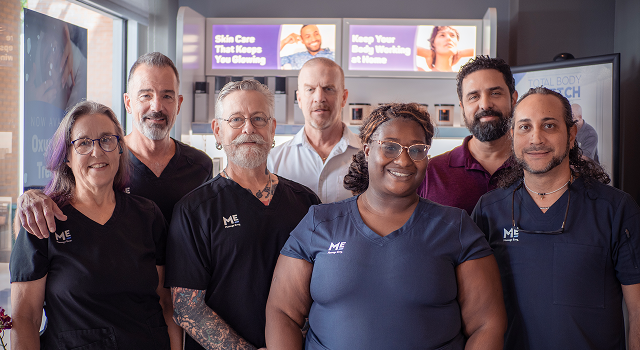
The environment you work in shapes your long-term health, your happiness, and how confident you feel in your craft. That’s where Massage Envy franchised locations stand out: they’re built around the idea that when therapists are supported, they thrive—and clients feel the difference.
A national presence with a strong reputation
Massage Envy is one of the most recognized names in massage and skin care, with hundreds of franchised locations across the country. That means you’re joining an extensive community of wellness professionals backed by a recognizable national brand—but working as a valued member of a caring, local team that gets to know you personally.
On top of that, Massage Envy franchised locations offer:
- A line of exclusive massage mediums created with therapist comfort in mind
- Unique and quality services like Hot Stone Treatments, Enhanced Muscle Therapy, and more
- A caring, collaborative community that shares knowledge and celebrates individuality
- SupportLinc: free, confidential access to mental health resources and counseling for you and your immediate family
A focus on your well-being
At Massage Envy franchised locations, people-first perks are a daily reality. The workplace culture prioritizes your physical, emotional, and professional well-being so you can feel your best while helping clients do the same. That includes:
- A Self-Care Commitment program designed specifically for body mechanics, injury prevention, warming up, cooling down, and building sustainable habits
- Leadership teams trained to support you, listen to you, and invest in your growth
- A health-and-safety-first environment for both employees and clients
Training and continuing education that help you grow
Massage Envy franchised locations invest deeply in helping therapists grow their skills. You’ll enjoy these benefits:
- 40+ free continuing education courses each year
- In-depth training from industry leaders
- Access to exclusive Massage Envy services and products, including Results-Driven Massage and Stretch, Rapid Tension Relief, and much more
- An annual AMTA membership with insurance* at no cost to you
*Visit www.amtamassage.org/massage-insurance/overview for details.
This kind of training support makes it easier to expand your skill set, stay current in the industry, and feel confident every time you step into the service room.
Opportunities for advancement
Whether you’re just starting out or looking to expand your career, Massage Envy franchised locations offer real paths for growth. Many therapists move into various advanced roles as their careers evolve, such as lead therapists, trainers, coaches, educators, or management as their careers evolve. You’ll be surrounded by people who want to help you succeed, and have the tools to actually make that happen.
Service provider perks that make your day smoother
You shouldn’t have to juggle everything at once. At Massage Envy franchised locations, you get everyday support that lets you focus on what you do best: helping people feel their best. Front desk teams help keep schedules full, common areas clean and ready, and your overall day running smoothly so you can stay fully present with each client.
How to get started with Massage Envy
Once you’ve completed your training and understand the basics of how to become a massage therapist, the next step is choosing where you want to put your skills into practice. If you’re looking for a supportive first employer—or a place to grow long-term—Massage Envy franchised locations make it simple to take that next step with confidence.
Requirements and qualifications
The qualifications to apply at a Massage Envy franchised location are straightforward:
- Completion of all city and state licensing requirements
- If your state, city or county does not offer licensing, then a certificate of completion of 500 hours of completed massage therapy/esthetician education from an educational institute is required
- A genuine passion for helping people feel their best
These requirements ensure that every therapist joins the team with a solid foundation and is ready to work safely, effectively, and professionally from day one.
Explore open positions
Each Massage Envy franchised location is independently owned and operated and thus the owners of each location hire independently, which means you can look for a location with an environment that fits your personality, schedule, and goals. Whether you’re seeking full-time stability, part-time flexibility, or your very first role after graduation, browsing open positions lets you compare locations, opportunities, and team cultures so you can choose the one that feels right.
Massage Envy franchised locations are workplaces that help you grow with confidence, develop your skills over time, and build a career you feel proud of; surrounded by people who want to see you succeed.
FAQs
How long does it take to become a massage therapist?
Most massage therapy programs take 6 to 12 months to complete, depending on your state’s required training hours, the school you choose, and whether you attend full time or part time. If you’re balancing work or family life, many programs offer flexible schedules that can extend or shorten how long you need to become a massage therapist, so you can complete your education at a pace that fits your life.
How much does it cost to become a massage therapist?
If you’re budgeting for your new career, you’re probably wondering how much does it cost to become a massage therapist? Costs vary widely based on your location, the school, and whether your program includes textbooks, supplies, or exam fees.
In general, tuition can range from $5,000 to $15,000, but many schools offer payment plans, financial aid options, or scholarships. Learn more about the Massage Envy scholarship program, which provides recipients with $2,500 each to help fund their education in massage therapy school.
What are the certification requirements to be a massage therapist?
Certification and licensure requirements differ by state, but the process typically includes:
- Completing the required number of education hours through an accredited program
- Finishing supervised clinical or hands-on training
- Passing a state-approved licensing exam, such as the MBLEx
- Submitting your licensure application and background check (if required by your state)
Some regions use the term certified, some use licensed, and others use registered, but the steps are similar: complete your training, pass your exam, and meet your local requirements to begin practicing safely and professionally.